Stirlingshire sits at the crossroads of Lowland Scotland and the Highlands, giving budget travellers access to Loch Lomond, the West Highland Way, and Falkirk's industrial heritage without paying city-centre prices. The five budget hotels and hostels in this guide range from lochside youth hostels to self-catering lodges and pub-room stays, covering the main corridors that most visitors actually use when exploring the region.
What It's Like Staying In Stirlingshire
Stirlingshire acts as a gateway region - it connects Glasgow (around 40 km to the southwest) with the Highland boundary, meaning almost every route north passes through it. Most attractions are spread across villages and national park zones, so a car or reliable bus connection genuinely affects how useful any accommodation is. Crowd patterns are seasonal and sharp: summer weekends on the West Highland Way and around Loch Lomond fill budget beds weeks in advance, while weekday stays in shoulder months remain significantly quieter and cheaper.
Hikers, cyclists, and outdoor-focused travellers benefit most from basing themselves here. City-break visitors seeking restaurants, nightlife, or walkable cultural density will find the region limiting outside of Falkirk and Stirling town itself.
Pros:
- Direct access to Loch Lomond & The Trossachs National Park from multiple accommodation bases
- Budget options positioned on or near the West Highland Way, eliminating transfer costs for walkers
- Free parking is standard across nearly all budget properties in the region
Cons:
- Public transport is sparse between villages, making a car essential for non-trail-based exploration
- Limited dining options within walking distance of most rural budget stays
- Peak summer weekends see availability drop sharply, especially at lochside properties
Why Choose Budget Hotels In Stirlingshire
Budget accommodation in Stirlingshire is dominated by youth hostels, self-catering lodges, and pub-with-rooms formats - not budget chains. This means self-catering kitchens and communal spaces are common, which significantly cuts daily food costs for multi-night stays. Prices at the region's hostels sit well below what comparable rural accommodation costs in the Lake District or the Scottish Borders, making this one of the more cost-efficient bases for outdoor tourism in the UK. The trade-off is that private ensuite rooms are limited at the lower end, and amenities like on-site restaurants are only present at select properties.
Travellers doing multi-day hikes such as the West Highland Way benefit specifically from the hostel network, as several properties are positioned directly on or adjacent to the trail. Self-catering lodges near Balmaha suit groups or families splitting costs per person.
Pros:
- Self-catering kitchens at hostel properties reduce meal costs substantially over a multi-night stay
- Several properties offer free private parking, eliminating a cost that adds up quickly in Scottish towns
- Lochside and forest settings at budget price points that are rare elsewhere in the UK
Cons:
- Shared bathroom facilities are common in the lower price tier, with limited private ensuite options
- On-site dining is not guaranteed - some properties require guests to self-cater entirely
- Booking flexibility is low during July and August, with many properties requiring advance reservation around 6 weeks out
Practical Booking & Area Strategy
The most strategically useful bases in Stirlingshire for budget travellers are Callander, Balmaha, and Crianlarich - each positioned to serve a different part of the national park. Callander gives the easiest road access to the Trossachs and is reachable by bus from Stirling, while Balmaha sits on the eastern shore of Loch Lomond and is the better choice for watersports or the southern section of the West Highland Way. Crianlarich is further north and works best as a stopover for walkers or those heading toward Glen Coe and the broader Highlands. Falkirk, covered by one property in this guide, is the most urban option and sits within 28 km of Edinburgh Airport, making it a practical arrival-night or departure-night stay. Key attractions in the region include Ben Lomond (Scotland's most southerly Munro), the Falkirk Wheel, and the Rob Roy Way - all accessible without paying highland resort prices when staying at the budget properties listed below.
Best Value Stays
These properties offer the strongest cost-per-night position in the region, with self-catering options and trail-adjacent locations that reduce overall trip costs beyond just the room rate.
-
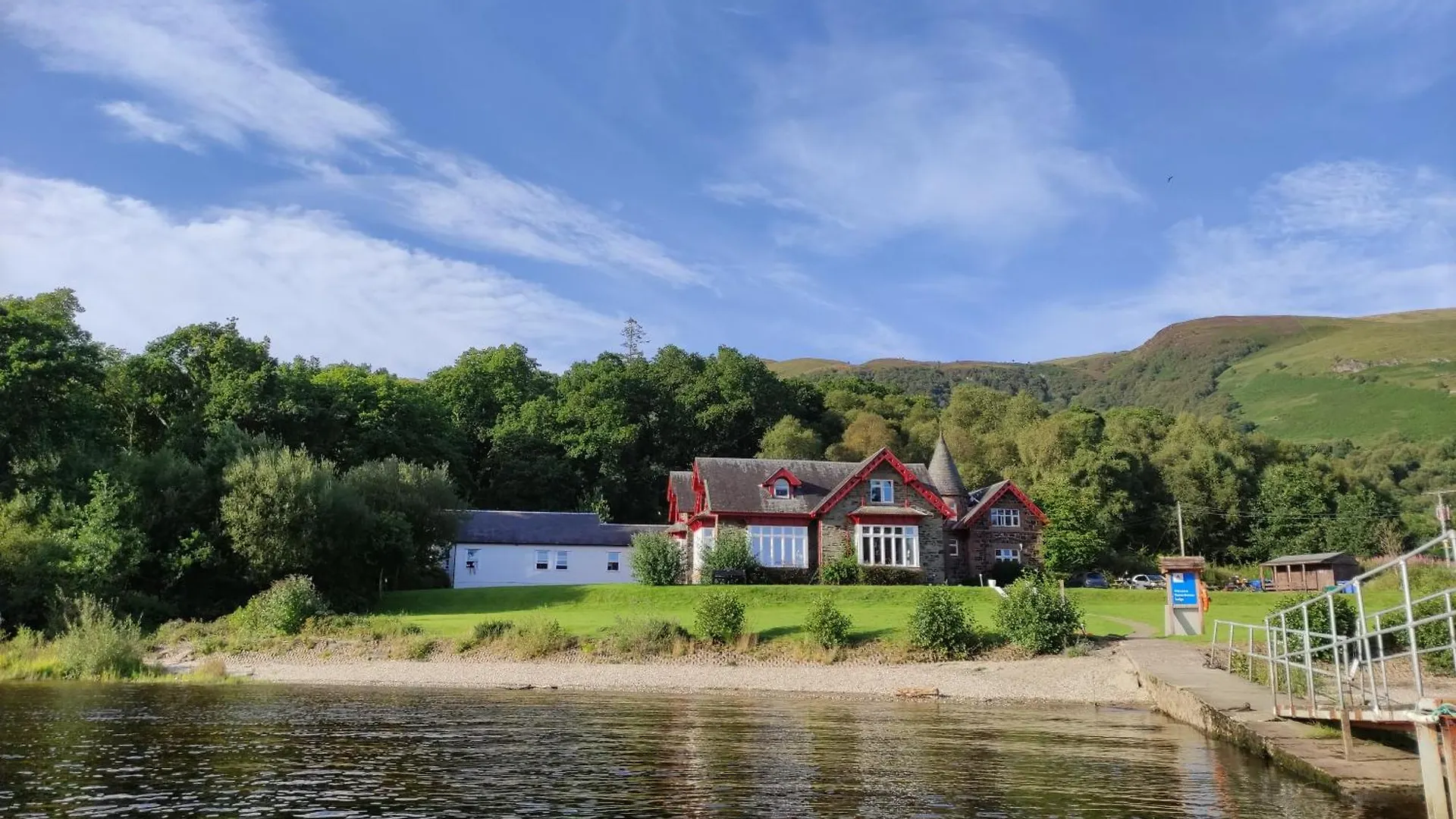
1. Rowardennan Youth Hostel
Show on map


 Check-infrom 16:00 until 22:00Check-outfrom 08:00 until 10:00
Just a few rooms left at the best rate!
from£ 25
-
2. Crianlarich Youth Hostel
Show on map


 Check-infrom 16:00 until 22:00Check-outfrom 07:00 until 10:00
Just a few rooms left at the best rate!
from£ 26
-
3. Callander Woods Holiday Park
Show on map


 Check-infrom 16:00 until 20:00Check-outfrom 09:00 until 10:00
Hurry – almost gone at this price!
from£ 94
Best Mid-Range Budget Picks
These two properties offer slightly more in terms of privacy, kitchen facilities, and urban access, while remaining firmly within the budget category for Stirlingshire.
-
4. Balmaha Lodges And Apartments
Show on map


 Check-infrom 15:00 until 18:00Check-outfrom 07:00 until 10:00
Hurry – almost gone at this price!
from£ 419
-
5. The Courtyard Bar, Kitchen, Rooms
Show on map


 Check-infrom 15:00 until 22:00Check-outfrom 09:00 until 11:00
Rooms filling fast – secure the best rate!
from£ 129
Smart Travel & Timing Advice
The clearest seasonal divide in Stirlingshire is between late June and August - when West Highland Way traffic, school holidays, and European visitors combine to fill budget beds weeks in advance - and the shoulder months of May, early June, and September, when conditions are still good for hiking and prices are meaningfully lower. Booking at least 6 weeks ahead for July and August is essential at lochside properties like Rowardennan, which has limited total capacity. Winter stays (November through March) are viable for travellers focused on Falkirk's attractions or indoor itineraries, but most national park activities wind down and some smaller properties reduce availability or close partially. For West Highland Way walkers, a 3-night minimum across Crianlarich and Rowardennan covers the central trail section efficiently without over-extending the itinerary. Last-minute availability is realistic only in October and April, when the region sits between its two main visitor peaks.